Breastfeeding and Returning to Work: Tips for Pumping & Planning

Breastfeeding and Returning to Work: Tips for Pumping & Planning

May 27, 2026 Women

Office Bag Breastfeeding and Going Back to Work

Returning to work after having a baby can feel like a big transition – especially if you are breastfeeding. The good news is, with a little planning and preparation, many parents can continue breastfeeding after returning to work.

With the right tools and support, you can keep your breastfeeding journey going while balancing work and family life.

[videosharebutton url="https://vimeo.com/1166460024?fl=pl&fe=ti"]
Flower top shape
Flower down shape

breastfeeding Breastfeeding and Going Back to Work

Returning to work after having a baby can feel like a big transition – especially if you are breastfeeding. The good news is, with a little planning and preparation, many parents can continue breastfeeding after returning to work.

With the right tools and support, you can keep your breastfeeding journey going while balancing work and family life.

Note book Start Preparing Before You Return to Work

Planning ahead can make the transition back to work smoother. Starting these steps a few weeks before returning to work can help you feel more confident and prepared.

Some helpful steps include:

1

Learning how to use your breast pump

2

Building a small freezer stash of milk

3

Introducing your baby to a bottle

4

Talking with your employer about pumping breaks

Mother using a breast pump while video calling on smartphone

Electric Pump Make Sure You Have the Right Pumping Equipment

Before you return to work, check that you have the equipment you need for pumping.

This may include:

Using the correct flange size is important.
A good fit helps make pumping more comfortable and can help you remove milk more effectively.

Remember!

Freezer Bottle Build a Small Freezer Stash

Many families find it helpful to have some milk stored before returning to work. You do not need a large supply. Even a small stash can help give you peace of mind as you transition back to work.

A simple way to build a milk stash is to:

Start 1-2 weeks before returning to work.
Pump once a day after your baby nurses.
Store the milk in the freezer.
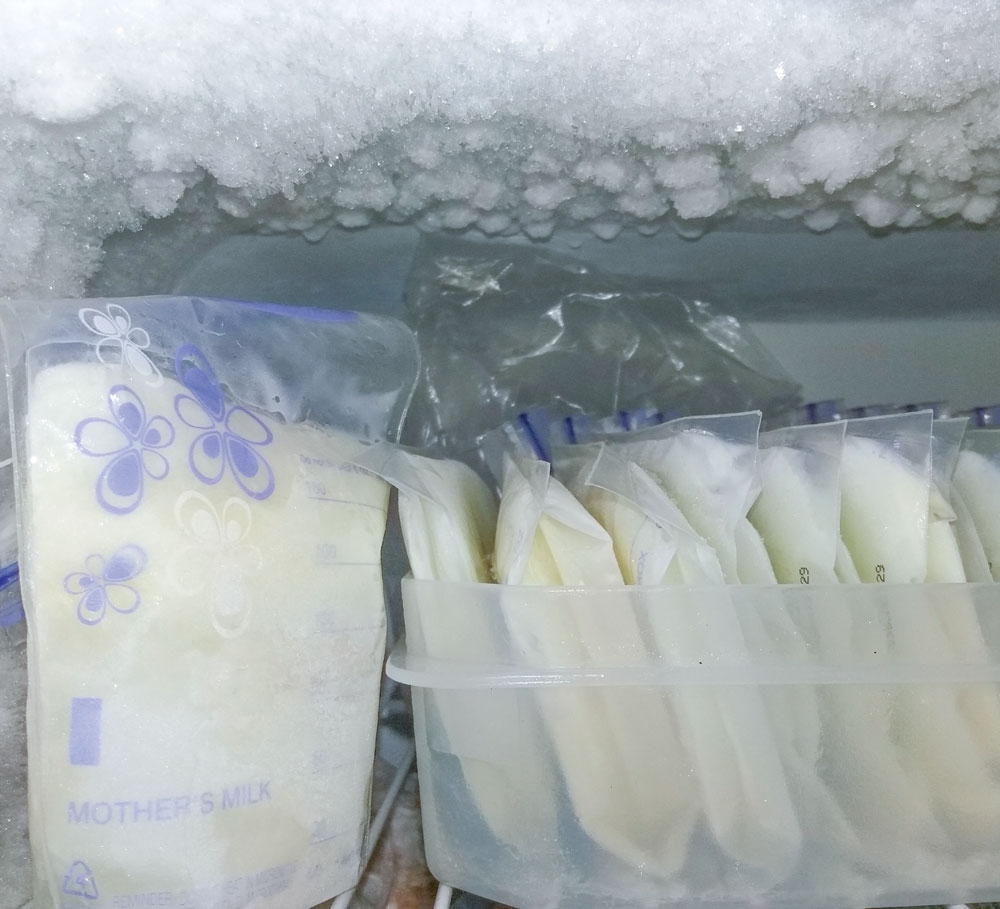
Frozen breast milk storage bags inside a freezer container

healthy baby Introduce Bottles Before Returning to Work

If your baby has not used a bottle yet, it can be helpful to introduce one at least two weeks before you return to work. Many families begin offering a bottle when their baby is around 3–6 weeks old, once breastfeeding is going well.

WHEN INTRODUCING A BOTTLE, YOU CAN:

Pump right before the bottle feeding so your baby can drink freshly pumped milk

OR

Give milk from the fridge or freezer and pump right after your baby eats.

Whenever your baby gets a bottle, you should pump. This helps maintain your milk supply.
Tip!

Milk Not How Much Milk Does a Breastfed Baby Need?

Breastfed babies usually drink about 2-4 ounces of milk per feeding once they are around 3-6 weeks old. This amount often stays fairly consistent as your baby grows, even though feeding patterns may change.

Every baby is different, so your baby may take slightly more or less.

Blue Blub Pumping at Work

Once you return to work, try to pump about every 2-3 hours while you are away from your baby. This helps maintain your milk supply and provides milk for future feedings. Your schedule may vary depending on your work environment.

Many parents pump during:

A morning
break

Lunch

An afternoon break

balance scale justice Know Your Pumping Rights at Work

There are laws that protect breastfeeding employees. These protections typically apply for at least one year after your baby’s birth. Before returning to work, it can be helpful to talk with your employer about your pumping needs, including break times and where you can pump.

Most employers are required to provide:

support can make the transition back to work

people heart You Are Not Alone

Having support can make the transition back to work much easier. Balancing breastfeeding and work can take some adjustment, but many parents successfully do both. If you have questions or need support, reach out to your local WIC office.

WIC breastfeeding peer counselors can help you:

Milk Not The Bottom Line

Continuing to breastfeed after returning to work is possible with some preparation. With planning and support, you can continue providing breast milk for your baby while working.

A few key steps can help:

REFERENCES:

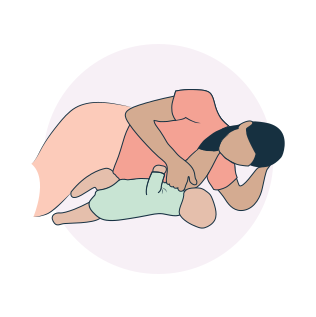
Side-Lying Hold

  1. For the right breast, lie on your right side with your baby facing you.
  2. Pull your baby close. Your baby’s mouth should be level with your nipple.
  3. In this position, you can cradle your baby’s back with your left arm and support yourself with your right arm and/or pillows.
  4. Keep loose clothing and bedding away from your baby.
  5. Reverse for the left breast.

This hold is useful when:

Cross-Cradle Hold

  1. For the right breast, use your left arm to hold your baby’s head at your right breast and baby’s body toward your left side. A pillow across your lap can help support your left arm.
  2. Gently place your left hand behind your baby’s ears and neck, with your thumb and index finger behind each ear and your palm between baby’s shoulder blades. Turn your baby’s body toward yours so your tummies are touching.
  3. Hold your breast as if you are squeezing a sandwich. To protect your back, avoid leaning down to your baby. Instead, bring your baby to you.
  4. As your baby’s mouth opens, push gently with your left palm on baby’s head to help them latch on. Make sure you keep your fingers out of the way.
  5. Reverse for the left breast.

This hold is useful when:

Clutch or “Football” Hold

  1. For the right breast, hold your baby level, facing up, at your right side.
  2. Put your baby’s head near your right nipple and support their back and legs under your right arm.
  3. Hold the base of your baby’s head with your right palm. A pillow underneath your right arm can help support your baby’s weight.
  4. To protect your back, avoid leaning down to your baby. Bring baby to you instead.
  5. Reverse for the left breast.

This hold is useful when:

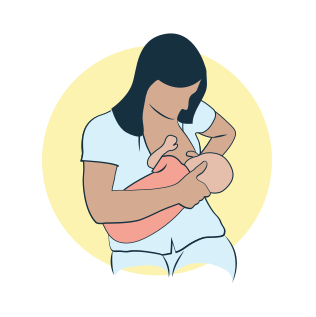
Cradle Hold

  1. For the right breast, cradle your baby with your right arm. Your baby will be on their left side across your lap, facing you at nipple level.
  2. Your baby’s head will rest on your right forearm with your baby’s back along your inner arm and palm.
  3. Turn your baby’s tummy toward your tummy. Your left hand is free to support your breast, if needed. Pillows can help support your arm and elbow.
  4. To protect your back, avoid leaning down to your baby. Instead, bring your baby to you.
  5. Reverse for the left breast.

This hold is useful when:

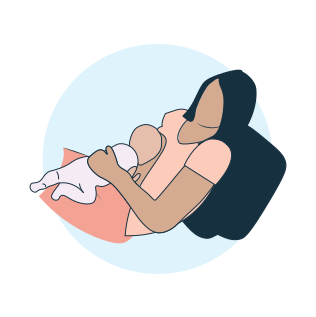
Laid-Back Hold

  1. Lean back on a pillow with your baby’s tummy touching yours and their head at breast level. Some moms find that sitting up nearly straight works well. Others prefer to lean back and lie almost flat.
  2. You can place your baby’s cheek near your breast, or you may want to use one hand to hold your breast near your baby. It’s up to you and what you think feels best.
  3. Your baby will naturally find your nipple, latch, and begin to suckle.

This hold is useful when: