Parents cuddling newborn in cozy nursery chair

How Partners Can Support Breastfeeding

July 8, 2026 Women

breastfeeding How Partners Can Support Breastfeeding

Breastfeeding is a team effort. While one parent may be doing the feeding, partners play an important role in helping both baby and parent feel supported, cared for, and connected.

Many partners wonder how they can help if the baby is exclusively breastfed. The good news is there are many ways to support breastfeeding and bond with your baby – and none of them require giving a bottle.

[videosharebutton url="https://vimeo.com/1192225314"]
White daisies with pale blue petals overlapping
Two illustrated daisies with yellow centers

breastfeeding How Partners Can Support Breastfeeding

Getting a good latch is one of the most important parts of breastfeeding. A good latch helps your baby get milk easily and helps keep feeding comfortable for you. Since babies eat often, feeding should not hurt.

The way you hold and position your baby can make a big difference.

gears and cogs interlocked Helping Before and After Feedings

One of the easiest ways for a partner to help is by supporting the feeding routine before and after nursing sessions.

Partners can:

Tip!

Overnight support can be especially helpful. A partner can bring the baby to the breastfeeding parent and help settle the baby afterward. Small tasks like these can make nighttime feedings feel less overwhelming and help everyone get a little more rest.

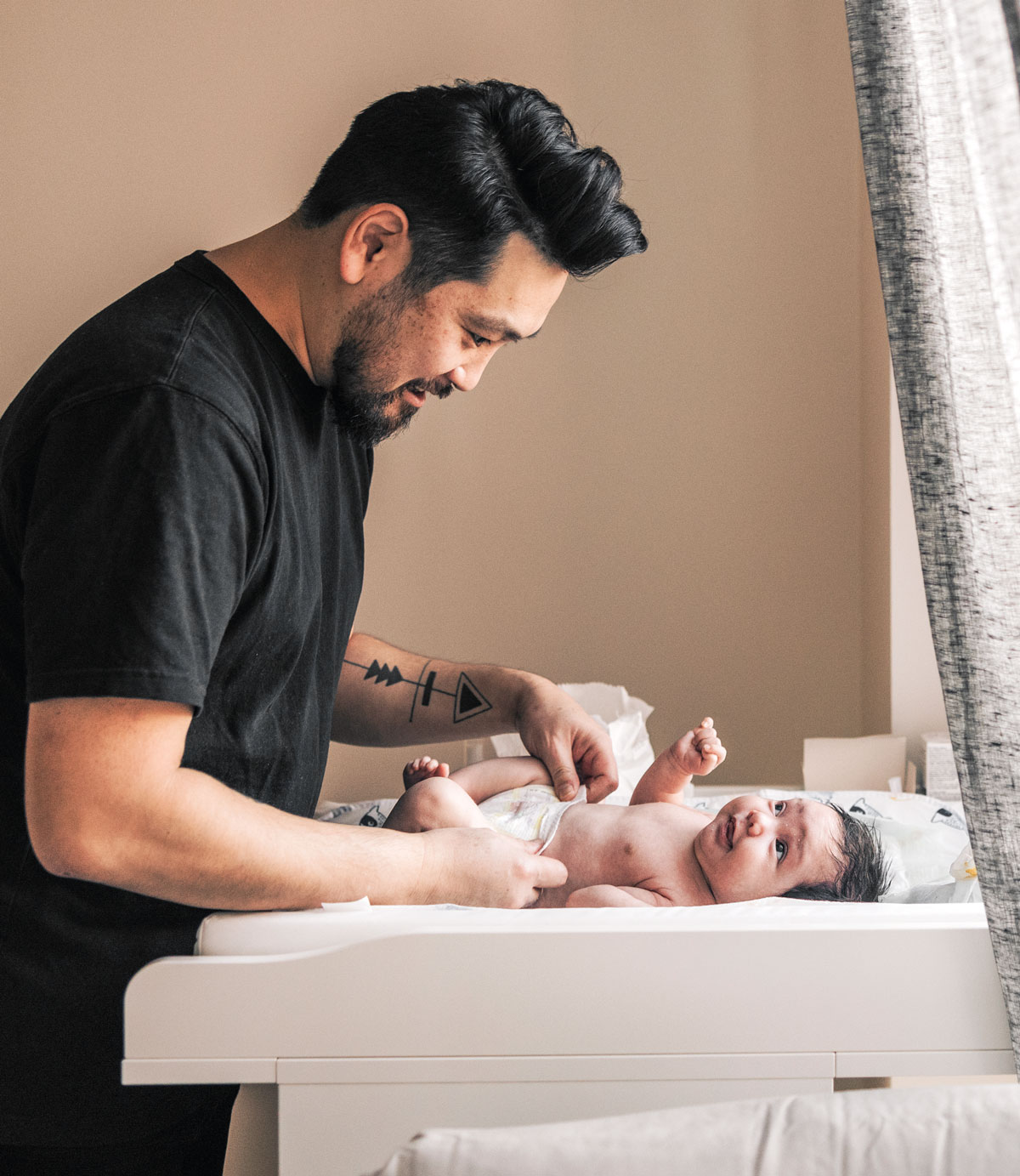
Father changing infants diaper, smiling gently
Father holding baby and using smartphone

healthy baby Keeping Track of Baby’s Needs

In the early weeks, there can be a lot to keep track of. Sharing these responsibilities helps reduce stress and keeps both parents involved in baby’s care.

Partners can help monitor:

nutrition Supporting Nutrition and Hydration

Breastfeeding parents need extra calories and fluids to support milk production and recovery after birth. Even simple gestures, like making sure there is always water nearby, can make a big difference.

Partners can help by:

Man serves woman breakfast in bed with smiles

healthy hand Bonding Goes Beyond Feeding

Some parents worry they may miss out on bonding if they are not feeding the baby directly. But bonding happens in many different ways.

Partners can bond with baby through:

Tip!

Any time spent caring for a baby helps strengthen attachment and connection. Feeding is just one part of that relationship. There is no need to give a bottle solely for bonding purposes if breastfeeding is going well and the family does not wish to introduce one yet.

Support Matters Emotional Support Matters

Learning to care for a new baby takes time. Encouragement and emotional support can go a long way during the breastfeeding journey.

Partners can help by:

Couple lovingly watching baby breastfeed on couch

healthy people You’re in This Together

Breastfeeding may be led by one parent, but support from a partner can make a huge impact on the experience for the whole family.

If you have questions or need support, reach out to your local WIC office or WIC peer counselor. You do not have to figure it all out on your own.

REFERENCES:

Side-Lying Hold

  1. For the right breast, lie on your right side with your baby facing you.
  2. Pull your baby close. Your baby’s mouth should be level with your nipple.
  3. In this position, you can cradle your baby’s back with your left arm and support yourself with your right arm and/or pillows.
  4. Keep loose clothing and bedding away from your baby.
  5. Reverse for the left breast.

This hold is useful when:

Cross-Cradle Hold

  1. For the right breast, use your left arm to hold your baby’s head at your right breast and baby’s body toward your left side. A pillow across your lap can help support your left arm.
  2. Gently place your left hand behind your baby’s ears and neck, with your thumb and index finger behind each ear and your palm between baby’s shoulder blades. Turn your baby’s body toward yours so your tummies are touching.
  3. Hold your breast as if you are squeezing a sandwich. To protect your back, avoid leaning down to your baby. Instead, bring your baby to you.
  4. As your baby’s mouth opens, push gently with your left palm on baby’s head to help them latch on. Make sure you keep your fingers out of the way.
  5. Reverse for the left breast.

This hold is useful when:

Clutch or “Football” Hold

  1. For the right breast, hold your baby level, facing up, at your right side.
  2. Put your baby’s head near your right nipple and support their back and legs under your right arm.
  3. Hold the base of your baby’s head with your right palm. A pillow underneath your right arm can help support your baby’s weight.
  4. To protect your back, avoid leaning down to your baby. Bring baby to you instead.
  5. Reverse for the left breast.

This hold is useful when:

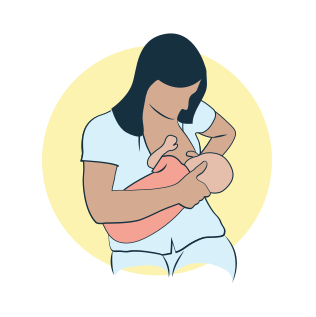
Cradle Hold

  1. For the right breast, cradle your baby with your right arm. Your baby will be on their left side across your lap, facing you at nipple level.
  2. Your baby’s head will rest on your right forearm with your baby’s back along your inner arm and palm.
  3. Turn your baby’s tummy toward your tummy. Your left hand is free to support your breast, if needed. Pillows can help support your arm and elbow.
  4. To protect your back, avoid leaning down to your baby. Instead, bring your baby to you.
  5. Reverse for the left breast.

This hold is useful when:

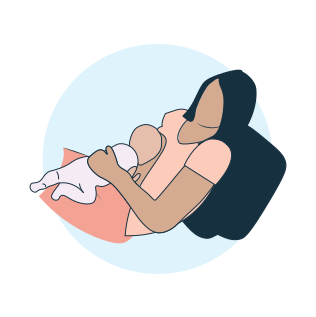
Laid-Back Hold

  1. Lean back on a pillow with your baby’s tummy touching yours and their head at breast level. Some moms find that sitting up nearly straight works well. Others prefer to lean back and lie almost flat.
  2. You can place your baby’s cheek near your breast, or you may want to use one hand to hold your breast near your baby. It’s up to you and what you think feels best.
  3. Your baby will naturally find your nipple, latch, and begin to suckle.

This hold is useful when: