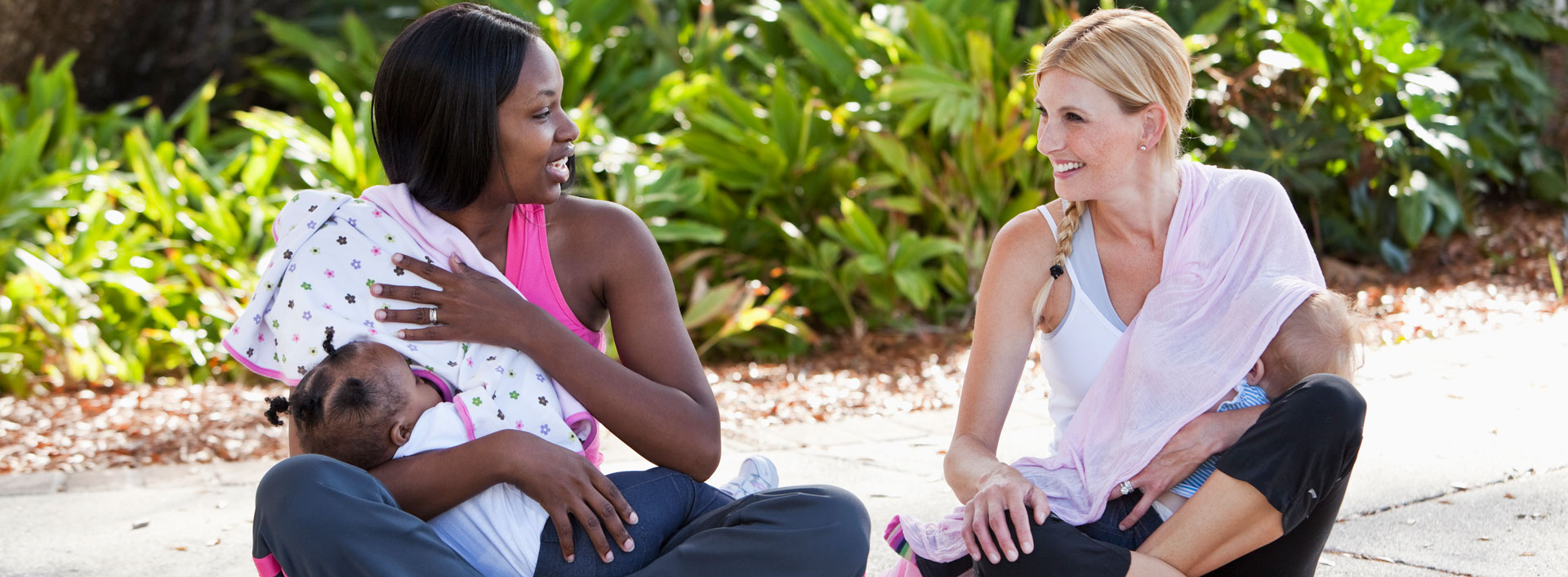
Two mothers breastfeeding their babies outdoors, talking and smiling

Breastfeeding in Public: Know Your Rights and Feel Prepared

November 18, 2026 Women

breastfeeding Breastfeeding in Public


Babies can get hungry anywhere – at the store, in a restaurant, at the park, or while you’re traveling.
If you feel nervous about breastfeeding in public, you’re not alone. A little planning and practice may help you feel more comfortable.

[videosharebutton url="https://vimeo.com/1232995839"]
White daisies with pale blue petals overlapping
Two illustrated daisies with yellow centers

balance justice Know your Rights

Laws in every state protect your right to breastfeed in public.
You can breastfeed your baby in any public or private place where you are allowed to be.

You do NOT have to:
Tip!

A nursing room or cover is always an option if it helps you feel more comfortable, but it’s your choice.

hand heart Choose What Feels Right for You

Every family is different. Some parents feel comfortable breastfeeding without a cover. Others prefer to use a nursing cover, blanket, or jacket. You may also choose a quiet space where there are fewer people or distractions.

There is no right or wrong way to breastfeed in public. The most important thing is that you and your baby feel safe and comfortable.

health right Practice Before You Go

Practicing at home can make breastfeeding away from home feel easier. If you usually use a nursing pillow, try practicing a comfortable position without it. You may not always have your pillow when you are out. Try different ways of holding your baby until you find one that works for both of you.

Try this first:

If you plan to use a cover, blanket, or jacket, try it at home first. This gives your baby time to get used to it. Make sure your baby’s face stays uncovered and they don’t get too warm.

T-shirt Dress for Easier Feeding

Clothing that provides easy access to your breast can make feeding simpler. Try different clothing options at home to see what feels most comfortable.

You might try:

starting food Watch for Early Hunger Signs

Crying is often a late sign of hunger. When possible, begin feeding when you notice your baby’s early signs. It may be easier to get settled and begin breastfeeding before your baby becomes upset.

Early hunger signs may include:
Smiling baby held up, hand in mouth

Person inside a shield icon Handling Comments or Stares

Breastfeeding in public may feel uncomfortable at first, especially if someone stares or makes an unkind comment. Remember that you are meeting your baby’s needs and your right to breastfeed is protected.

You do not have to explain yourself or respond. If you choose to respond, you can calmly say, “I have the right to feed my baby here.”

alert-white
Your safety comes first. If someone makes you feel unsafe, move away and ask an employee, security officer, or another trusted person for help.

Bar chart with upward arrow It Gets Easier With Practice

Like many parts of breastfeeding, feeding your baby in public may take practice. Each time you do it, you may feel a little more prepared and confident.

A WIC breastfeeding peer counselor can help answer your questions, help you practice different positions, and support you every step of the way.

REFERENCES:

Side-Lying Hold

  1. For the right breast, lie on your right side with your baby facing you.
  2. Pull your baby close. Your baby’s mouth should be level with your nipple.
  3. In this position, you can cradle your baby’s back with your left arm and support yourself with your right arm and/or pillows.
  4. Keep loose clothing and bedding away from your baby.
  5. Reverse for the left breast.

This hold is useful when:

Cross-Cradle Hold

  1. For the right breast, use your left arm to hold your baby’s head at your right breast and baby’s body toward your left side. A pillow across your lap can help support your left arm.
  2. Gently place your left hand behind your baby’s ears and neck, with your thumb and index finger behind each ear and your palm between baby’s shoulder blades. Turn your baby’s body toward yours so your tummies are touching.
  3. Hold your breast as if you are squeezing a sandwich. To protect your back, avoid leaning down to your baby. Instead, bring your baby to you.
  4. As your baby’s mouth opens, push gently with your left palm on baby’s head to help them latch on. Make sure you keep your fingers out of the way.
  5. Reverse for the left breast.

This hold is useful when:

Clutch or “Football” Hold

  1. For the right breast, hold your baby level, facing up, at your right side.
  2. Put your baby’s head near your right nipple and support their back and legs under your right arm.
  3. Hold the base of your baby’s head with your right palm. A pillow underneath your right arm can help support your baby’s weight.
  4. To protect your back, avoid leaning down to your baby. Bring baby to you instead.
  5. Reverse for the left breast.

This hold is useful when:

Cradle Hold

  1. For the right breast, cradle your baby with your right arm. Your baby will be on their left side across your lap, facing you at nipple level.
  2. Your baby’s head will rest on your right forearm with your baby’s back along your inner arm and palm.
  3. Turn your baby’s tummy toward your tummy. Your left hand is free to support your breast, if needed. Pillows can help support your arm and elbow.
  4. To protect your back, avoid leaning down to your baby. Instead, bring your baby to you.
  5. Reverse for the left breast.

This hold is useful when:

Laid-Back Hold

  1. Lean back on a pillow with your baby’s tummy touching yours and their head at breast level. Some moms find that sitting up nearly straight works well. Others prefer to lean back and lie almost flat.
  2. You can place your baby’s cheek near your breast, or you may want to use one hand to hold your breast near your baby. It’s up to you and what you think feels best.
  3. Your baby will naturally find your nipple, latch, and begin to suckle.

This hold is useful when: