
A tired mother holding her newborn baby in her arms at home

Postpartum Psychosis: Signs and Where to Get Help

October 21, 2026 Women

store white plus Postpartum Psychosis: Know the Signs and Get Help

Having a baby can bring many changes. It’s common to feel tired, worried, or overwhelmed at times. But sudden changes in a person’s thoughts or behavior may be signs of postpartum psychosis, a rare but serious illness. Postpartum psychosis is different from postpartum depression.

Postpartum psychosis is a medical emergency. Getting help quickly can protect the person who gave birth, the baby, and others. With treatment and support, recovery is possible.

breastmilk Baby What is Postpartum Depression?

Postpartum depression is a mood disorder that begins after a baby is born. It can affect a parent’s mood and ability to manage daily life.

Signs may include:
Did you know?
A person with postpartum depression typically stays in touch with reality. They know where they are and understand what is happening around them. However, postpartum depression is still a serious condition that needs prompt care. A health care provider can help with counseling, medicine, or both.

blue alert What is Postpartum Psychosis?

Postpartum psychosis affects the way a person thinks and understands what is real. Symptoms often begin suddenly, usually during the first two weeks after birth, but they can also begin later.

Signs may include:

postpartum-psychosis-affects-the-way-person
Why Immediate Help Matters

Thoughts of suicide or harming oneself or the baby need immediate help.
Call or text 988 for crisis support. If there is immediate danger, call 911.

twohand Safely How are Postpartum Depression and Postpartum Psychosis Different?
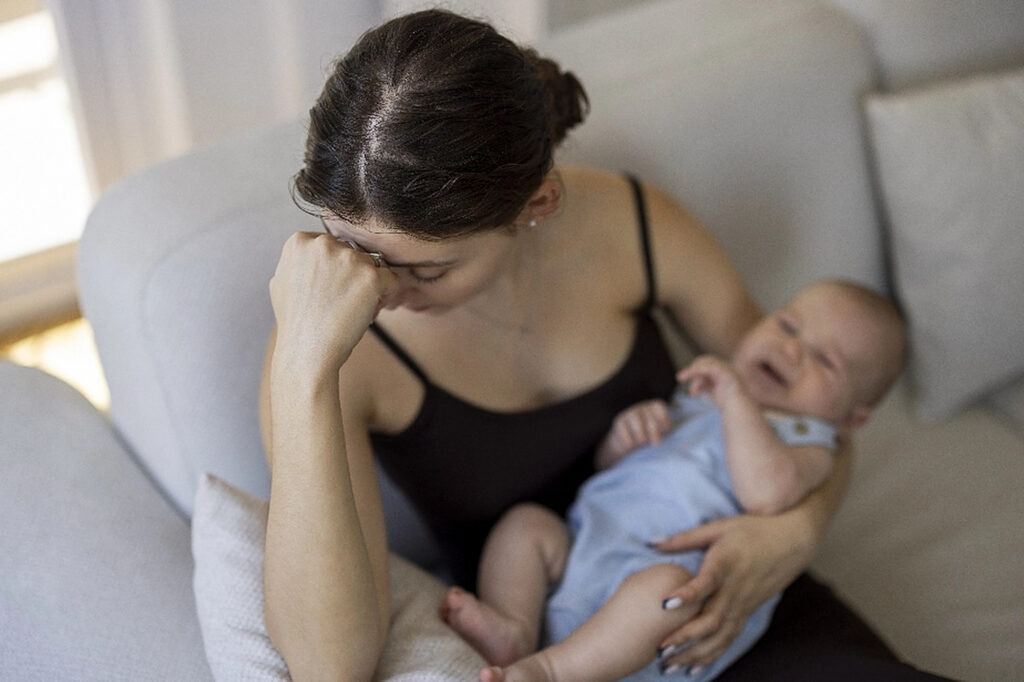
mother-crying-newborn
Postpartum Depression
father-comforting-mother
Postpartum Psychosis

Both are real health conditions.
Neither condition is the parent’s fault, and neither means someone is a bad parent.

Remember!

question develop Who Can Develop Postpartum Psychosis?

Postpartum psychosis affects 1 to 2 out of every 1,000 people who have recently given birth.

The risk may be higher for someone who has bipolar disorder, has experienced psychosis before, or has a family history of these conditions. However, postpartum psychosis can happen even when there is no known mental health history. Families should never blame themselves or the person experiencing the illness.

Red triangular warning sign with exclamation mark

If you notice signs of postpartum psychosis call 911 or go to the nearest emergency room right away. Do not leave the person alone. Ask another trusted adult to care for the baby while help is being arranged.
Do not wait to see whether the symptoms go away on their own.

build healthy How Loved Ones Can Help

Family members and friends may notice the warning signs before the parent does. If something does not seem right, trust your concern and act quickly.

couple-with-doctor-clinic

breastmilk white plus Free Support is Available

988_Suicide

988 Suicide & Crisis Lifeline

Call or text 988, or use the online chat at 988lifeline.org. Support is free, confidential, and available 24 hours a day. Click here to learn more:

PSI-Round-words

National Maternal Mental Health Hotline

Call or text 1-833-TLC-MAMA (1-833-852-6262). This free, confidential hotline is available 24 hours a day in English and Spanish. Interpreters are available in many other languages. Partners and family members may call, too. Trained counselors can listen and connect families with local care. Click here to learn more:

Thumbnails

Postpartum Support International HelpLine

Call 1-800-944-4773 or text HELP to 800-944-4773 for support in English. For Spanish, text 971-203-7773. This HelpLine offers information and connections to local resources, but it is not an emergency line. Click here to learn more:

PSI also offers a free online support group for people recovering from postpartum psychosis. This group is for people who are no longer experiencing active psychosis.
Click here to learn more:

women wic A Final Note

You can also talk with your WIC staff, doctor, midwife, or another trusted health care provider.
WIC staff can listen without judgment and help connect your family with support. If postpartum psychosis may be happening, get emergency care first.

Postpartum psychosis is serious, but it’s also treatable. Getting help quickly is an act of care for the parent, the baby, and the whole family.

REFERENCES:

Side-Lying Hold

  1. For the right breast, lie on your right side with your baby facing you.
  2. Pull your baby close. Your baby’s mouth should be level with your nipple.
  3. In this position, you can cradle your baby’s back with your left arm and support yourself with your right arm and/or pillows.
  4. Keep loose clothing and bedding away from your baby.
  5. Reverse for the left breast.

This hold is useful when:

Cross-Cradle Hold

  1. For the right breast, use your left arm to hold your baby’s head at your right breast and baby’s body toward your left side. A pillow across your lap can help support your left arm.
  2. Gently place your left hand behind your baby’s ears and neck, with your thumb and index finger behind each ear and your palm between baby’s shoulder blades. Turn your baby’s body toward yours so your tummies are touching.
  3. Hold your breast as if you are squeezing a sandwich. To protect your back, avoid leaning down to your baby. Instead, bring your baby to you.
  4. As your baby’s mouth opens, push gently with your left palm on baby’s head to help them latch on. Make sure you keep your fingers out of the way.
  5. Reverse for the left breast.

This hold is useful when:

Clutch or “Football” Hold

  1. For the right breast, hold your baby level, facing up, at your right side.
  2. Put your baby’s head near your right nipple and support their back and legs under your right arm.
  3. Hold the base of your baby’s head with your right palm. A pillow underneath your right arm can help support your baby’s weight.
  4. To protect your back, avoid leaning down to your baby. Bring baby to you instead.
  5. Reverse for the left breast.

This hold is useful when:

Cradle Hold

  1. For the right breast, cradle your baby with your right arm. Your baby will be on their left side across your lap, facing you at nipple level.
  2. Your baby’s head will rest on your right forearm with your baby’s back along your inner arm and palm.
  3. Turn your baby’s tummy toward your tummy. Your left hand is free to support your breast, if needed. Pillows can help support your arm and elbow.
  4. To protect your back, avoid leaning down to your baby. Instead, bring your baby to you.
  5. Reverse for the left breast.

This hold is useful when:

Laid-Back Hold

  1. Lean back on a pillow with your baby’s tummy touching yours and their head at breast level. Some moms find that sitting up nearly straight works well. Others prefer to lean back and lie almost flat.
  2. You can place your baby’s cheek near your breast, or you may want to use one hand to hold your breast near your baby. It’s up to you and what you think feels best.
  3. Your baby will naturally find your nipple, latch, and begin to suckle.

This hold is useful when: