Mother holding newborn skin to skin in hospital bed

Breastfeeding After a C-Section: Tips for WIC Moms

September 30, 2026 Women

breastfeeding latch Breastfeeding After a C-Section

If you just had a C-section, or are planning to have one, you might be wondering:
Can I still breastfeed my baby? The answer is a big YES!

While recovering from surgery adds a few extra steps to your journey, you can absolutely breastfeed your baby successfully. Here is what to expect and some simple tips to make it easier for both of you.

[videosharebutton url="https://vimeo.com/1211761301"]
White daisies with pale blue petals overlapping
Two illustrated daisies with yellow centers

breastfeeding latch Breastfeeding After a C-Section

If you just had a C-section, or are planning to have one, you might be wondering:

Can I still breastfeed my baby? The answer is a big YES!

While recovering from surgery adds a few extra steps to your journey, you can absolutely breastfeed your baby successfully. Here is what to expect and some simple tips to make it easier for both of you.

breastmilk lady Start Skin-to-Skin as Soon as You Can

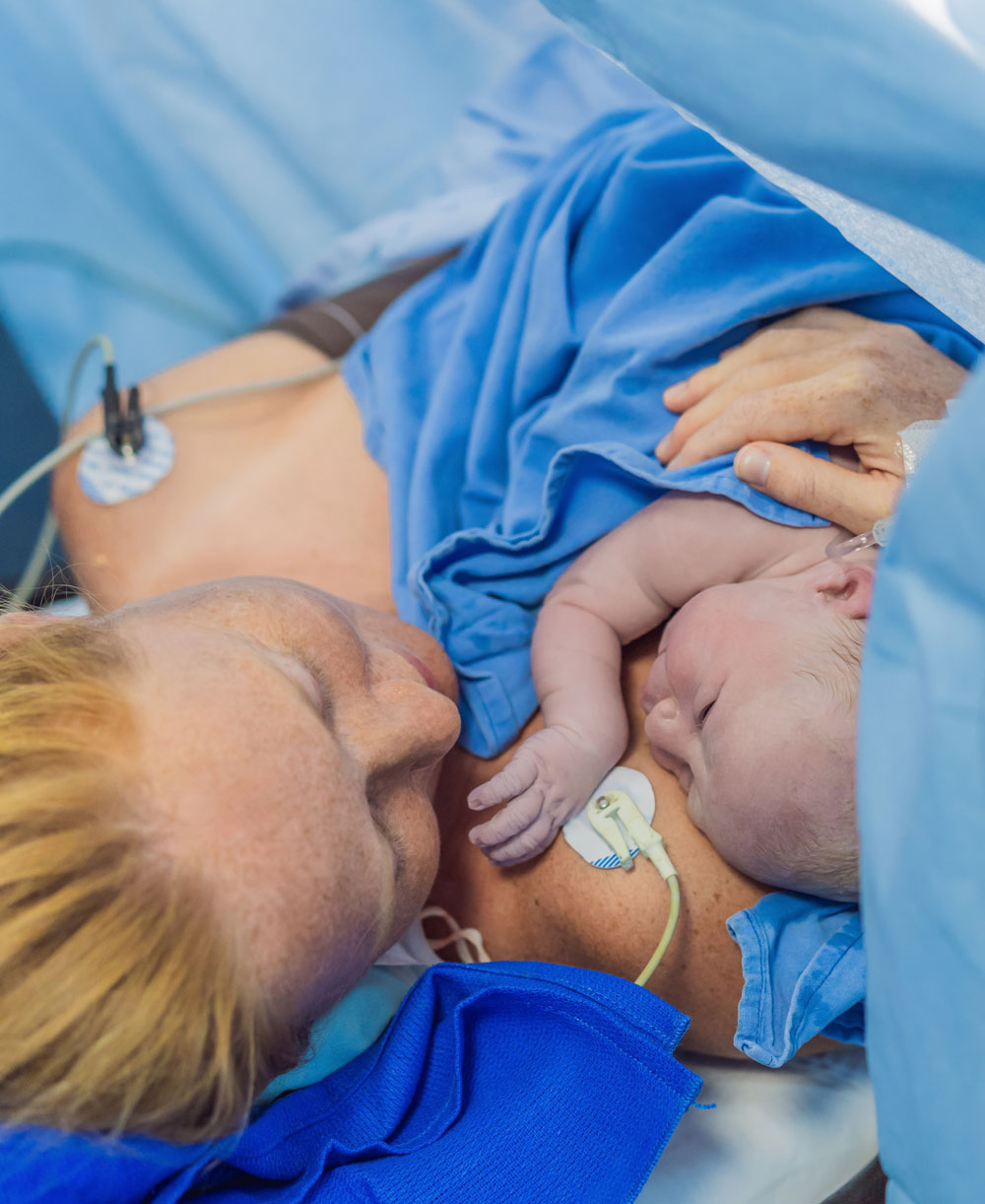
If you and your baby are both doing well after birth, ask your doctor or nurse to place your baby right on your bare chest. This is called skin-to-skin contact.
Holding your baby skin-to-skin:
Tip!
Don’t worry about holding the baby all on your own right away. A nurse, partner, or family member can help you hold your baby safely while you rest and recover.
Mother holding her newborn skin-to-skin after delivery
question Your Milk Supply: What to Expect

A common worry for moms who have a C-section is whether their milk will be late.

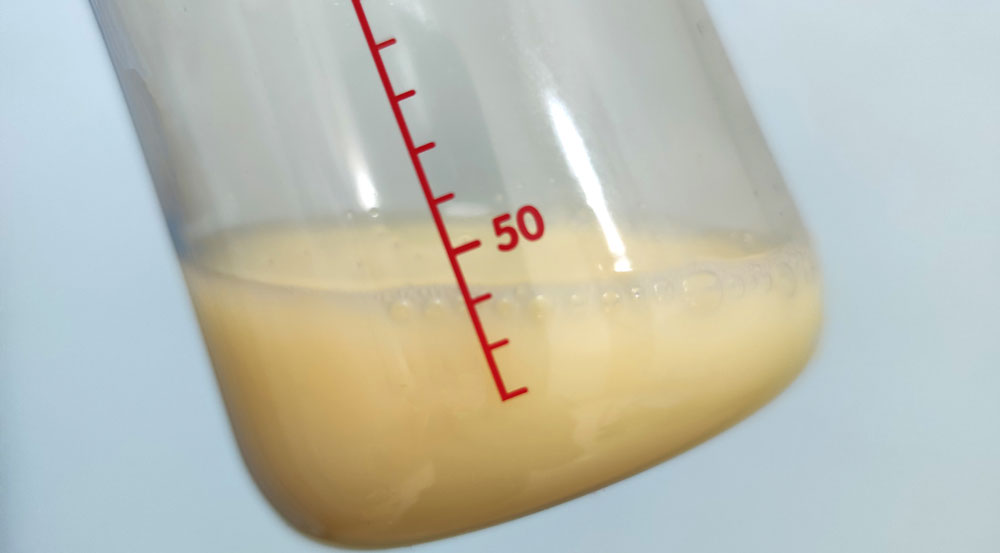
Close-up of a bottle showing a small amount of expressed colostrum
day-one-three
DAY 1 - 3

Your breasts will make colostrum (co-los-trum). This is your baby’s very first milk. It’s thick, usually yellow or clear, and packed with everything your newborn needs.

Newborn breastfeeding while resting a hand on mother's chest
three-four-five icon
DAY 3 - 5

This is when your milk usually starts to “come in” and increase. After a C-section, this might take an extra day or two. This is normal! It doesn’t mean you can’t make enough milk.

To help build your milk supply, feed your baby whenever they show signs of hunger. This is usually 8 to 12 times every 24 hours (yes, even at night!). If you are separated from your baby, ask your care team to help you pump or hand-express your milk to keep your supply going.
Remember!
twohand heart Comfortable Positions to Protect Your Belly
Your belly will be very sore after surgery. The key to comfortable breastfeeding is keeping your baby’s weight off your incision (your stitches).
Try these comfortable positions:
/.
THe Football Hold:

Hold your baby tucked under your arm like a football, resting on a pillow beside you. Their feet will point toward your back, keeping all weight off your belly.

2.
Laid-Back Hold:

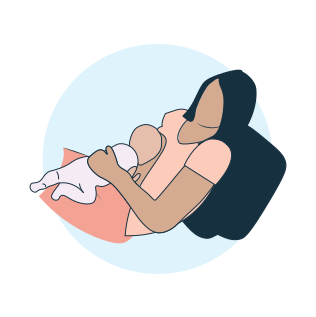
Lean back comfortably in bed with lots of pillows supporting your back, shoulders, and arms. Let your baby lie tummy-down on your chest.

3.
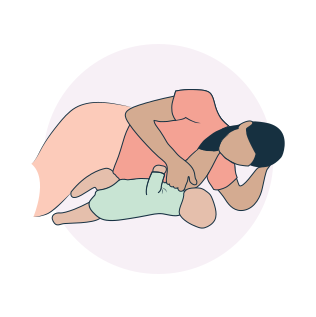
Side-Lying Hold:

Lie on your side with your baby facing you. This position lets you rest your body completely while you feed.

thumb pain Managing Pain and Swelling

Taking care of yourself is a big part of taking care of your baby.

Keeping your pain under control makes it much easier to relax and hold your baby. Many pain medicines used after a C-section are safe to take while breastfeeding. Just make sure to tell your doctors, nurses, and pharmacist that you are nursing so they can give you the right options.

Pain Medicine

Nurse checking on a mother holding her newborn in a hospital bed

Breast Swelling (Engorgement)

During your surgery, you likely received extra fluids through an IV. This can sometimes cause extra swelling in your body, including your breasts. If your breasts feel very hard or your baby is having trouble latching:

Blue checkmark with decorative n inside circle icon

Gently soften the area:
Hand-express a little milk before you nurse to soften the area around your nipple.

Blue checkmark with decorative n inside circle icon

Skip the hard massage:
Do not use deep, painful massage or long heat packs, as this can make swelling worse.

Blue checkmark with decorative n inside circle icon

Use cold packs:
Put a cold pack wrapped in a clean cloth on your breasts between feeds to reduce swelling.

healthy people When to Ask for Help

Learning to breastfeed is a team effort. You don’t have to do it alone! Reach out for help if:

Your doctor, a hospital lactation consultant, and your local WIC breastfeeding peer counselor are always there to support you.

Every breastfeeding journey is unique. Give yourself grace, take time to heal, and enjoy getting to know your sweet baby. You are doing an amazing job!

Side-Lying Hold

  1. For the right breast, lie on your right side with your baby facing you.
  2. Pull your baby close. Your baby’s mouth should be level with your nipple.
  3. In this position, you can cradle your baby’s back with your left arm and support yourself with your right arm and/or pillows.
  4. Keep loose clothing and bedding away from your baby.
  5. Reverse for the left breast.

This hold is useful when:

Cross-Cradle Hold

  1. For the right breast, use your left arm to hold your baby’s head at your right breast and baby’s body toward your left side. A pillow across your lap can help support your left arm.
  2. Gently place your left hand behind your baby’s ears and neck, with your thumb and index finger behind each ear and your palm between baby’s shoulder blades. Turn your baby’s body toward yours so your tummies are touching.
  3. Hold your breast as if you are squeezing a sandwich. To protect your back, avoid leaning down to your baby. Instead, bring your baby to you.
  4. As your baby’s mouth opens, push gently with your left palm on baby’s head to help them latch on. Make sure you keep your fingers out of the way.
  5. Reverse for the left breast.

This hold is useful when:

Clutch or “Football” Hold

  1. For the right breast, hold your baby level, facing up, at your right side.
  2. Put your baby’s head near your right nipple and support their back and legs under your right arm.
  3. Hold the base of your baby’s head with your right palm. A pillow underneath your right arm can help support your baby’s weight.
  4. To protect your back, avoid leaning down to your baby. Bring baby to you instead.
  5. Reverse for the left breast.

This hold is useful when:

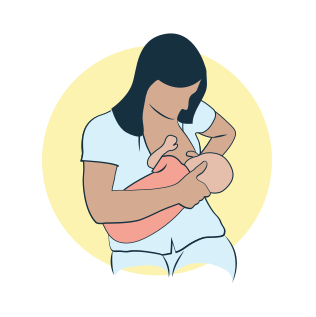
Cradle Hold

  1. For the right breast, cradle your baby with your right arm. Your baby will be on their left side across your lap, facing you at nipple level.
  2. Your baby’s head will rest on your right forearm with your baby’s back along your inner arm and palm.
  3. Turn your baby’s tummy toward your tummy. Your left hand is free to support your breast, if needed. Pillows can help support your arm and elbow.
  4. To protect your back, avoid leaning down to your baby. Instead, bring your baby to you.
  5. Reverse for the left breast.

This hold is useful when:

Laid-Back Hold

  1. Lean back on a pillow with your baby’s tummy touching yours and their head at breast level. Some moms find that sitting up nearly straight works well. Others prefer to lean back and lie almost flat.
  2. You can place your baby’s cheek near your breast, or you may want to use one hand to hold your breast near your baby. It’s up to you and what you think feels best.
  3. Your baby will naturally find your nipple, latch, and begin to suckle.

This hold is useful when: